Performance Academy · Regulatory & Safety
Trading Education: The Honest Story of an Industry
By Francois Oosthuizen ·
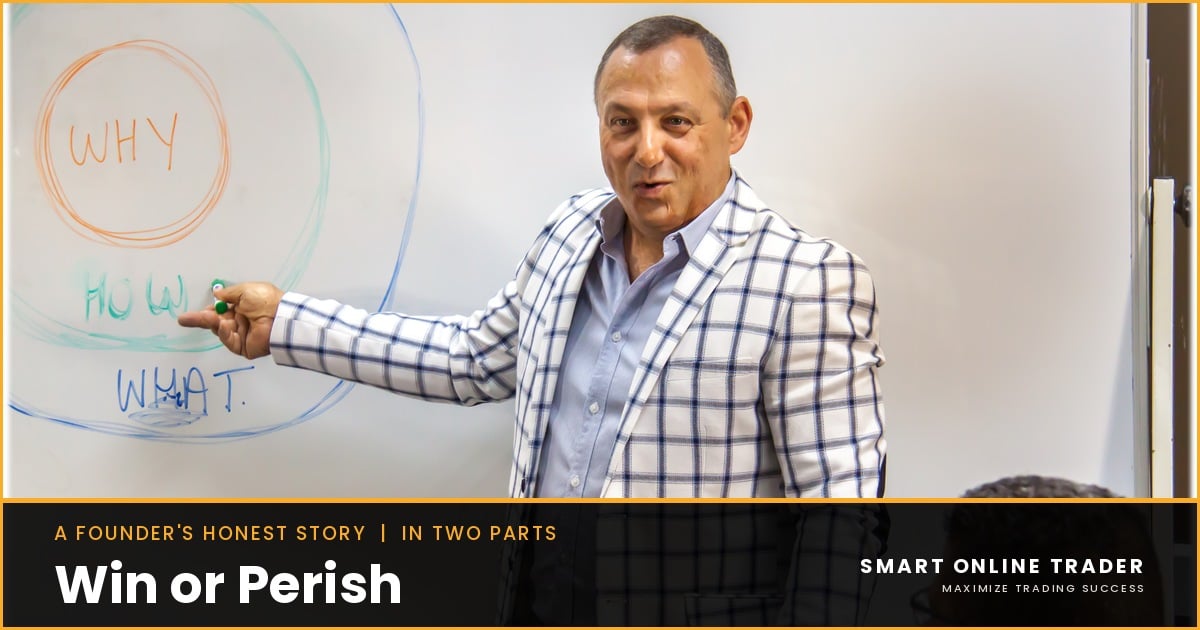
I have been in trading education since 1999. In that time I have watched this profession change almost beyond recognition, and I have not always been proud of the industry I came up in. So this is an honest account of how trading education grew from a room full of promises into a governed profession, what the hard years taught me, and where I believe we are all heading next. I am writing it in the first person because it is personal, and because I think the honest version is the one worth telling.
The Trading Education Industry I Came Up In
First, let me be blunt about the early years. For a long time, “selling courses” in the trading world meant exactly what you fear it meant. A room, a promise, a payment, and very little accountability for what happened after the card was swiped. In fact, I watched people spend money they did not have, on the strength of a story about markets that nobody in that room could actually stand behind. Admittedly, I was part of that industry. Not the worst of it, but part of it, and I have spent the years since trying to build something that earns the trust those early years so often abused.
The Regulation That Split the Industry in Two
The first real reckoning arrived with the Consumer Protection Act 68 of 2008. Suddenly there was a cooling-off period. A client could walk out, think it over, and change their mind. To operators who lived on pressure and urgency, that was a threat. To me, in time, it became a compass. If your business cannot survive a client being given room to reconsider, your business was never the honest kind. Ultimately, that single piece of regulation quietly split the field in two. As a result, the sellers chased the next unregulated thing. The builders stayed, and started doing the harder work of actually developing people.
How Trading Education Grew Up
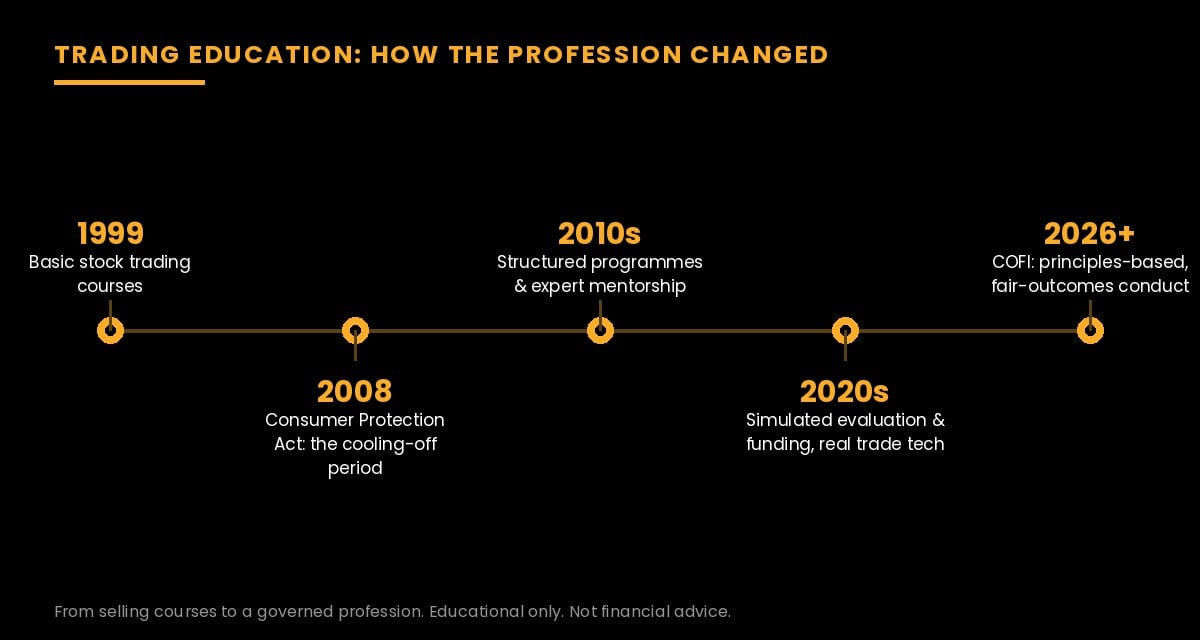
From there, trading education matured in stages. Basic stock trading courses became structured programmes. Programmes became expert mentorship. Mentorship became simulated environments where a person could prove a skill before risking a cent. Every stage was regulation, technology, or hard experience forcing us to be better than we were the year before. Indeed, the timeline below traces that arc, and it is worth understanding, because it explains why the standards today look nothing like the standards of twenty years ago.
The Part I Do Not Usually Tell
Now the honest part, the part I do not usually say out loud. It has not always worked. For instance, there were months I could not honour our financial obligations. There were months I could not pay my own staff on time. I have sat across from people who trusted me with their careers, and with their families’ income, and told them the money was not there yet, and asked them to hold on. Of course, that is a particular kind of weight. You can carry a bad quarter. Carrying the disappointment of people who believed in you is much heavier.
Here is what I will never forget, though. The right people stayed. Not all of them, and I hold nothing against the ones who could not. But the right ones looked at the same empty account I was looking at, and chose to keep building anyway, because they believed in what we were trying to do. Our landlord backed us when the easy decision was to walk away. So I did not inspire them. They inspired me, and on the days I had very little left in the tank, their belief is what I borrowed to keep going.
The Hardest Challenge Was Never the Markets. It Was People.
Regulation reshaped this industry, but if I am honest, it was never my hardest challenge. People were. A business like this depends entirely on partnering with people who have a genuine heart for the work, and finding them is far harder than it sounds.
In fact, most of our financial turmoil did not come from the markets or the regulator. It came from appointing the wrong people. I want to be careful here, because they were rarely bad people. More often they were good people in the wrong seats, in roles that were never going to suit them. Some arrived promising the moon and the stars, with all the right experience on paper, and then did not deliver, while still, understandably, expecting to be paid in full.
Admittedly, I am no saint in this story either. There were times I saw the problem clearly and still failed, dismally, to face it, to have the honest conversation, or to act soon enough. Avoiding a hard decision felt kinder in the moment. It was not. Instead, it cost the business, and it cost the very people I was trying not to hurt.
So the real turning point was not a clever strategy. Ultimately, it was learning to put the right people in the right seats, and to own my part honestly when I got it wrong.
Win or Perish: What the Hard Years Taught Me
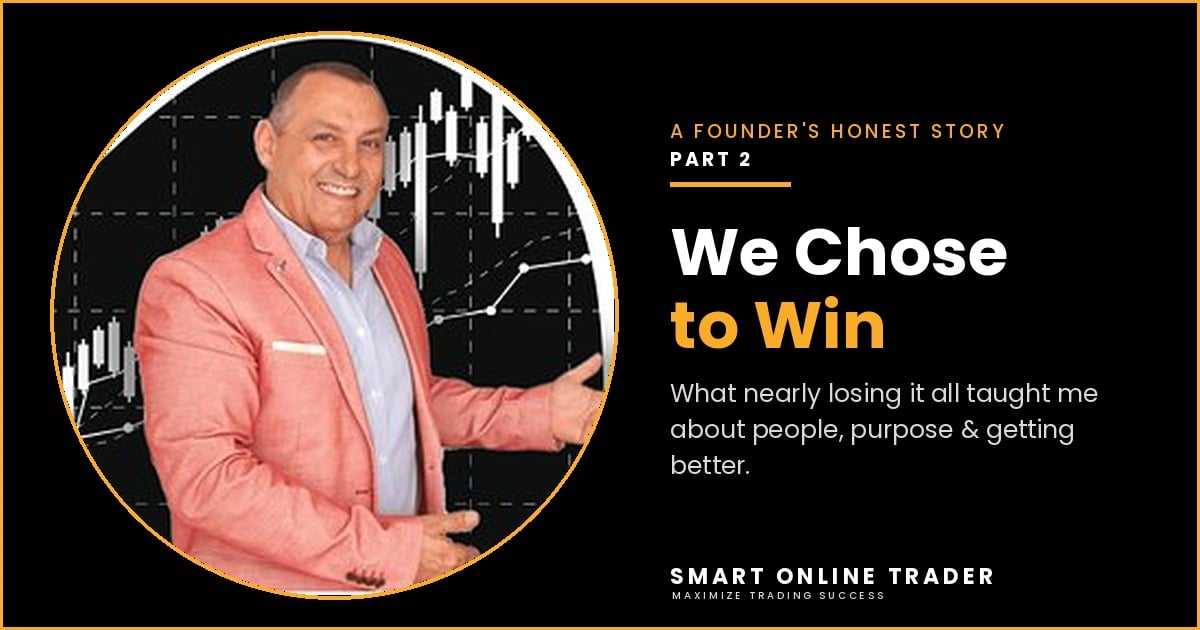
In the end, that near-collapse taught me the lesson this whole article is built on. In short, you always have two choices. Win or perish. There is no comfortable third option where you quietly coast. We chose to win, and not out of stubbornness, but because we believe unconditionally in what this profession can do for ordinary people when it is done properly. The hardest and most useful realisation was this: the struggle was not a verdict, it was feedback. The empty account was not the universe telling us to stop. It was telling us to get better.
So we did. We got better at developing skills, ours first, then our clients’. We got serious about how quickly the ground moves under this profession, how technology, including AI, is reshaping what a trader needs to learn, how regulatory requirements keep rising, and how client needs evolve year on year. Then we stopped trying to be good at everything ourselves, and started partnering with the right people, people who already held the knowledge and experience we lacked. The goal shifted from survival, which is just breathing, to growing, scaling, and staying relevant in an industry that will happily leave you behind.
Two Ideas That Carried Me Through
Two beliefs carried me through the worst of it, and they still do. The first: you cannot sow fear and harvest courage, and you cannot sow thoughts of poverty and expect to harvest abundance. What you plant in your own mind is what eventually grows in your business, and on the days the numbers screamed panic, planting anything other than fear was the hardest discipline I owned. The second is simpler: gratitude attracts abundance. I do not offer that as a slogan. I offer it as something I watched happen, because the more genuinely grateful we were for the people who stayed, the more those relationships gave back, in loyalty, in effort, and in second chances we did not strictly deserve.
Why I Welcome Stricter Regulation
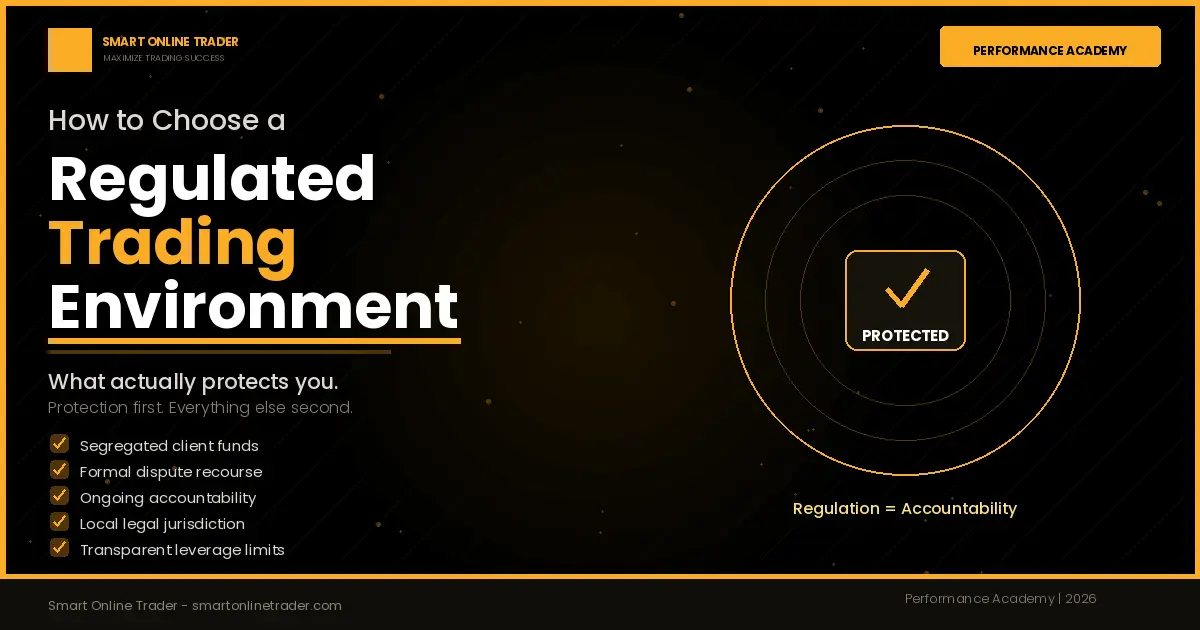
All of which brings me to where this profession is going, and why I am, of all things, grateful for the regulator. South Africa is moving from the old rules-based world of FAIS toward the COFI framework, a principles-based regime built around fair outcomes and the fair treatment of customers. Certainly, it is stricter, it is harder to fake, and it is far better for the consumer. For anyone still selling dreams, that is bad news. For those of us who chose to build something real, and who got better because we had no choice, it is the environment we have waited twenty-five years for. Naturally, it is also exactly why we rebuilt everything around structure and evidence, which you can see in the Smart Online Trader ecosystem and our approach to evidence-based trading.
So this was never a success story. It became a growth story, and it is still not finished. Smart Online Trader, a brand of Diversit-e Smart Trade College (Pty) Ltd, is the version of that long climb I am finally proud of. We are not done. We are simply, finally, building on the right foundation.
See what we chose to build
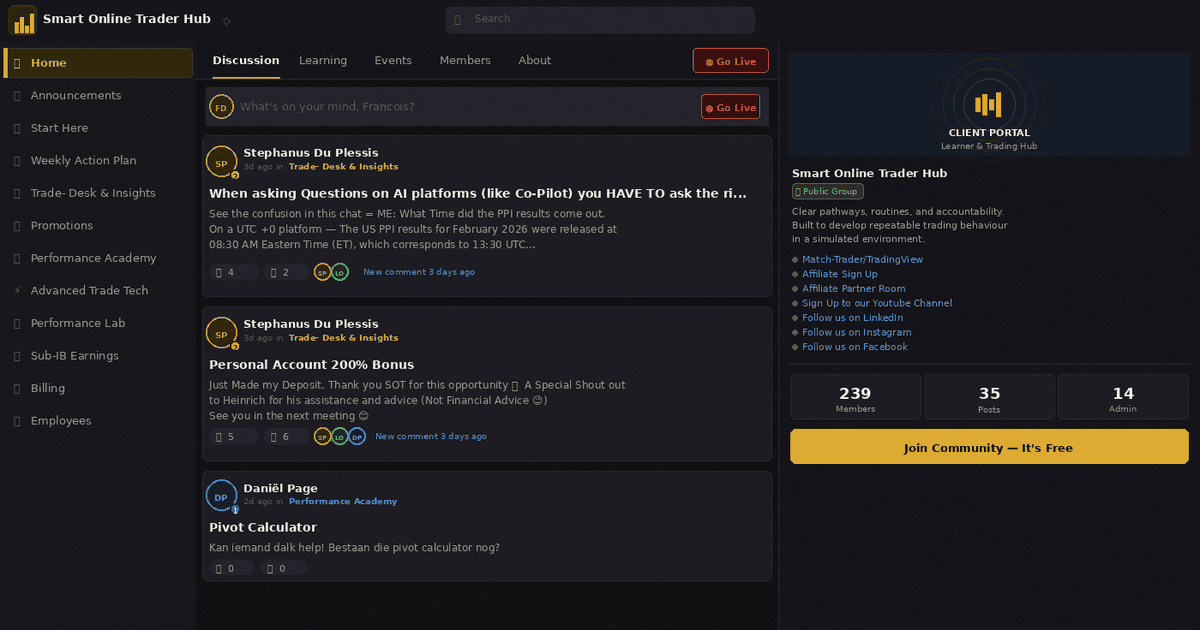
Join The Hub, free, and explore the resources, tools and Trade Journal for yourself.
Download the Smart Online Trader App

Android / Play Store

iOS / App Store
The Rewards Rebate Programme: Months 7 and 13
Importantly, part of building on the right foundation is making sure your commitment is rewarded. Stay the course, and the programme returns real value at two clear milestones.
REAL REWARDS
The Rewards Rebate Programme
“What you invest to learn becomes what you trade with.”
Month 7
A simulated $5,000 Prop Firm Evaluation activates, included with your membership. So your training meets its first real test.
Month 13
Your membership value returns to you as credit in a Simulated Funded Account, with a 50/50 split on the profits you generate.
Simulated environment throughout. Effective 1 June 2026 and subject to the Rewards Rebate Programme terms.
Frequently Asked Questions
How has trading education changed in South Africa?
Trading education has moved from unaccountable “sell the dream” courses toward a governed profession. The Consumer Protection Act 68 of 2008 introduced a cooling-off period, and the industry evolved through structured programmes, mentorship, and simulated evaluation, with conduct regulation continuing to raise the bar.
What is the Consumer Protection Act cooling-off period?
Under the Consumer Protection Act 68 of 2008, consumers have a right to cancel certain agreements within a set period, giving them room to reconsider a purchase made under pressure. For trading education, it helped protect clients from high-pressure sales tactics.
What is the COFI framework?
The Conduct of Financial Institutions (COFI) framework is South Africa’s move toward a principles-based conduct regime focused on fair customer outcomes. It is set to consolidate and modernise existing conduct laws, raising standards across the financial sector.
Is Smart Online Trader a licensed Financial Services Provider?
No. Smart Online Trader and its employees are not licensed Financial Services Providers. We provide education only, not financial or investment advice, and we always encourage clients to consult an authorised FSP before making trading or investment decisions.
Does trading education guarantee trading profits?
No. No honest trading education can guarantee profits. Good education develops skill, discipline, and understanding of risk. Trading always carries the risk of loss, and past performance never guarantees future results.
What is Smart Online Trader?
Smart Online Trader is a brand of Diversit-e Smart Trade College (Pty) Ltd, offering structured trading education, honest evaluation, simulated funding, and trading technology, built around the standards a modern, governed profession demands.
Where do I start?
Start by joining The Hub at no cost. You can explore the free resources, tools, and Trade Journal, and see the standard of trading education for yourself before deciding on anything further.
Francois Oosthuizen is the Founder of Smart Online Trader, a brand of Diversit-e Smart Trade College (Pty) Ltd. Smart Online Trader and its employees are not licensed Financial Services Providers (FSPs). This content is for educational purposes only and does not constitute financial or investment advice. Trading carries the risk of loss, and past performance does not guarantee future results. Always consult an authorised FSP before making any trading or investment decisions. See our full risk warning and disclaimer.