
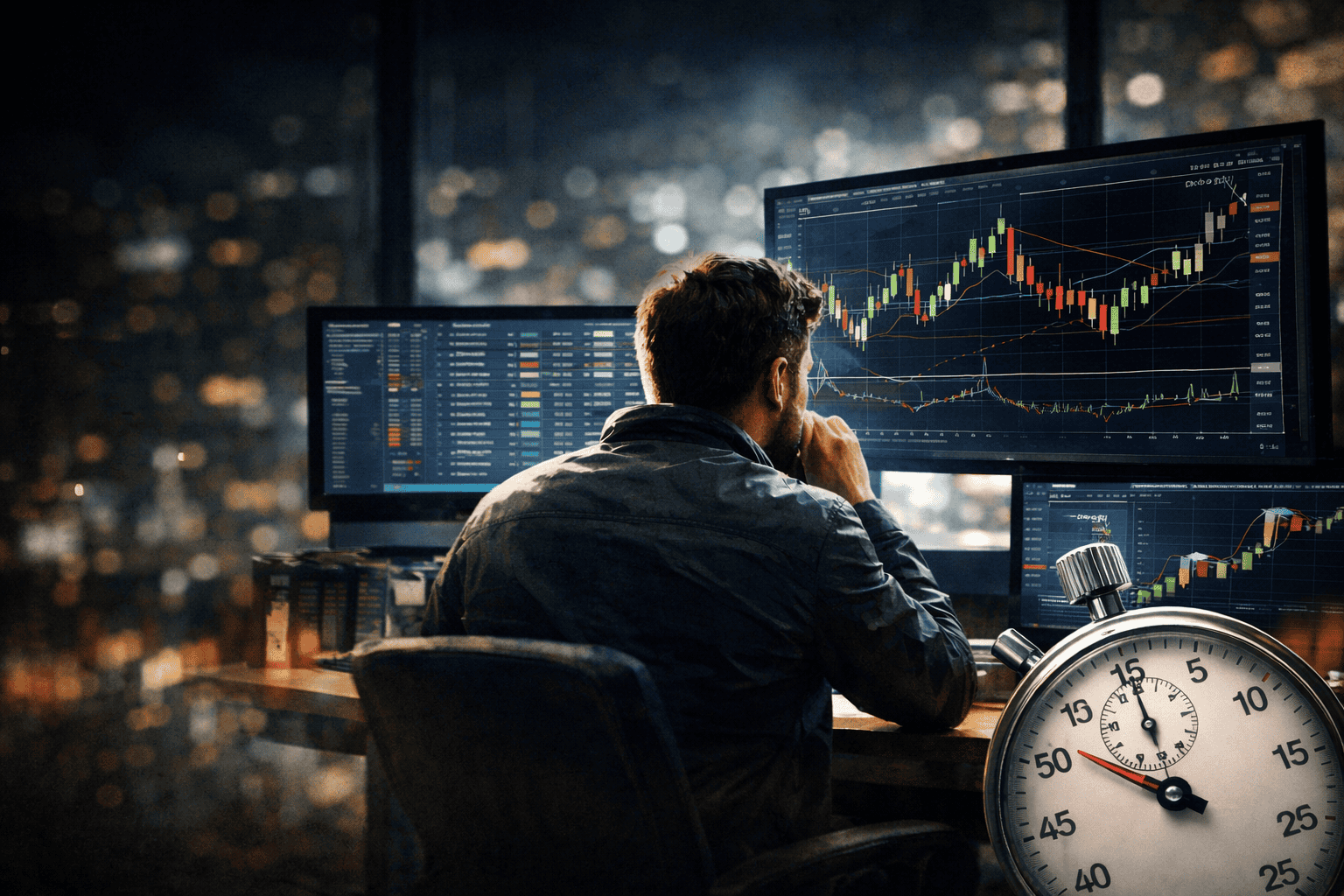
Discipline is not negotiable. Most traders don’t fail because they lack intelligence. They don’t fail because they can’t read a chart. Or because they chose the “wrong” strategy. They fail because they lack discipline in trading.
Discipline in trading is often misunderstood. Many assume it means having strong willpower, forcing yourself to follow rules, or suppressing emotion through sheer effort. In reality, discipline is not an emotional trait at all – it is a systemic outcome.
Disciplined traders don’t rely on motivation. They rely on structure. And understanding this distinction is the first step toward consistent performance.
Definition Box
Trading discipline is the ability to execute a repeatable process under pressure – without negotiating your rules in the moment.
Structure is the system that makes discipline automatic: pre-defined decisions, capped risk, repeatable execution, and measurable feedback.
Key Takeaways
- Discipline isn’t personality – it’s system design.
- If you’re deciding during the trade, discipline is already leaking.
- Risk management is the backbone of discipline – not a “nice-to-have.”
- Consistency is a side effect of structure, not something you force.
- Simulation and evaluation models accelerate discipline by rewarding process over impulse.
Discipline Is Not Self-Control – It’s Environmental Design
The biggest mistake traders make is believing discipline lives inside their personality.
It doesn’t. If discipline depended on willpower alone, every trader would eventually fail, because willpower is inconsistent by nature. Humans are emotional, reactive, and easily influenced by stress, fatigue, and external pressure.
Professional traders understand something most retail traders don’t:
The environment dictates behavior far more than intention ever will.
This is why institutions don’t rely on “gut feel” or individual discipline. They build frameworks, rules, and checks that guide behavior automatically.
True trading discipline is created when:
- Decisions are pre-defined
- Risk is capped by rules, not emotions
- Execution follows process, not impulse
- Feedback loops are immediate and measurable
When these elements exist, discipline becomes default behaviour – not forced behavior.
Why Most Traders Break Their Own Rules
Ask any struggling trader if they have rules, and the answer is almost always “yes.” Also, ask if they follow those rules consistently, and the answer quietly becomes “sometimes.” This gap between knowing and doing is where most trading accounts are lost.
The reasons are predictable:
- Overtrading after a loss
- Increasing risk to “make it back”
- Taking low-quality setups out of boredom or FOMO
- Ignoring stop losses when price gets close
- Entering trades emotionally instead of systematically
These behaviors are not random. They emerge when the trading environment allows unstructured decision-making. When rules are optional, emotions take over.
Discipline Is Built Before the Trade, Not During It
One of the most important truths about trading discipline is this:
If you are deciding during the trade, you have already lost discipline.
Disciplined traders make their decisions before the market opens:
- When to trade
- What conditions must be present
- How much risk is allowed
- When to stop for the day
Once the session begins, execution becomes systematic.
This removes the trader from the emotional center of the decision. The trader becomes an operator, not a gambler. Markets reward preparation, not reaction.
Risk Management: The Backbone of Discipline
No discussion about discipline is complete without addressing risk. You can have the best strategy in the world, but without disciplined risk management, your edge will eventually collapse.
Disciplined traders:
- Risk a fixed percentage per trade
- Accept losses as part of the process
- Never increase risk emotionally
- Focus on long-term expectancy, not individual outcomes
The goal is not to win every trade. The goal is to survive long enough for probability to work in your favor.
Discipline is the difference between a trader who stays in the game and one who is forced out.
[Risk reference CFD risk education]
Consistency Is a Side Effect, Not a Goal
Many traders chase consistency directly – and fail. Consistency doesn’t come from trying harder or wanting it more. It emerges naturally when:
- Rules are clear
- Execution is repeatable
- Risk is controlled
- Performance is tracked objectively
In other words, consistency is a by-product of disciplined systems. When traders focus only on profits, emotions dominate. When they focus on process, profits follow.
The Role of Simulation and Evaluation in Building Discipline
One of the fastest ways to build real discipline is through structured simulation. Simulated environments allow traders to:
- Practice execution without emotional financial pressure
- Build confidence through repetition
- Test rules under realistic conditions
- Develop patience and restraint
Evaluation-based trading models reinforce discipline by rewarding process over impulse. You are not paid for excitement – you are rewarded for consistency.
This mirrors how professional environments operate.
Why Discipline Separates Retail Traders from Professionals
The difference between amateur and professional traders is rarely intelligence. It is discipline under pressure.
Professionals operate within constraints:
- Maximum drawdowns
- Strict risk limits
- Defined trading windows
- Performance accountability
These constraints are not restrictions – they are freedom from emotional decision-making.
Retail traders often resist structure because it feels limiting. In reality, structure is what allows performance to scale. Freedom without discipline is chaos. Discipline creates controlled freedom.
Trading Discipline Is a Skill You Build, Not a Trait You’re Born With
No one starts as a disciplined trader.
Discipline is trained through:
- Repetition
- Feedback
- Rules
- Accountability
- Environment design
The traders who succeed long term are not the most aggressive or confident – they are the most consistent. They understand that markets are not conquered through force, but navigated through control.
Final Thought: Discipline Is the Edge You Can Control
Markets are uncertain. Outcomes are probabilistic. No strategy works all the time. But discipline is fully within your control.
When you master discipline, you master:
- Risk
- Execution
- Psychology
- Longevity
And in trading, longevity is everything. Because the traders who stay disciplined don’t just survive – they compound.
Questions Frequently Asked
1) What is discipline in trading?
Discipline in trading is consistent execution of a defined process – rules, risk limits, and routines – even when emotions push you to improvise.
2) Why do traders break their rules after a loss?
Because stress spikes and the environment still allows “optional rules.” Without hard constraints, emotion becomes the decision-maker.
3) Is discipline just willpower?
No. Willpower fluctuates. Structure makes disciplined behavior repeatable and reliable.
4) What’s the fastest way to build discipline?
Use a pre-session plan, fixed risk rules, and a stop-trading rule for the day – then review outcomes objectively.
5) How does risk management support discipline?
Risk caps reduce emotional intensity. When damage is limited, panic decisions are less likely.
6) Do evaluations help build discipline?
Yes. Constraint-based models reinforce consistency by rewarding process over impulse.
7) What should I track to get more disciplined?
Track rule adherence (yes/no), risk per trade, number of trades, and whether you stopped when your daily limit was hit.
8) How do I protect myself from online trading scams?
Be skeptical of profit promises, verify terms, and use credible education and risk disclosures.
Compliance Note
This article is for education and general information only and not investment and or financial advice. Trading is high risk. Leveraged products can magnify losses. Past performance is not indicative of future results.
