
Definition Box
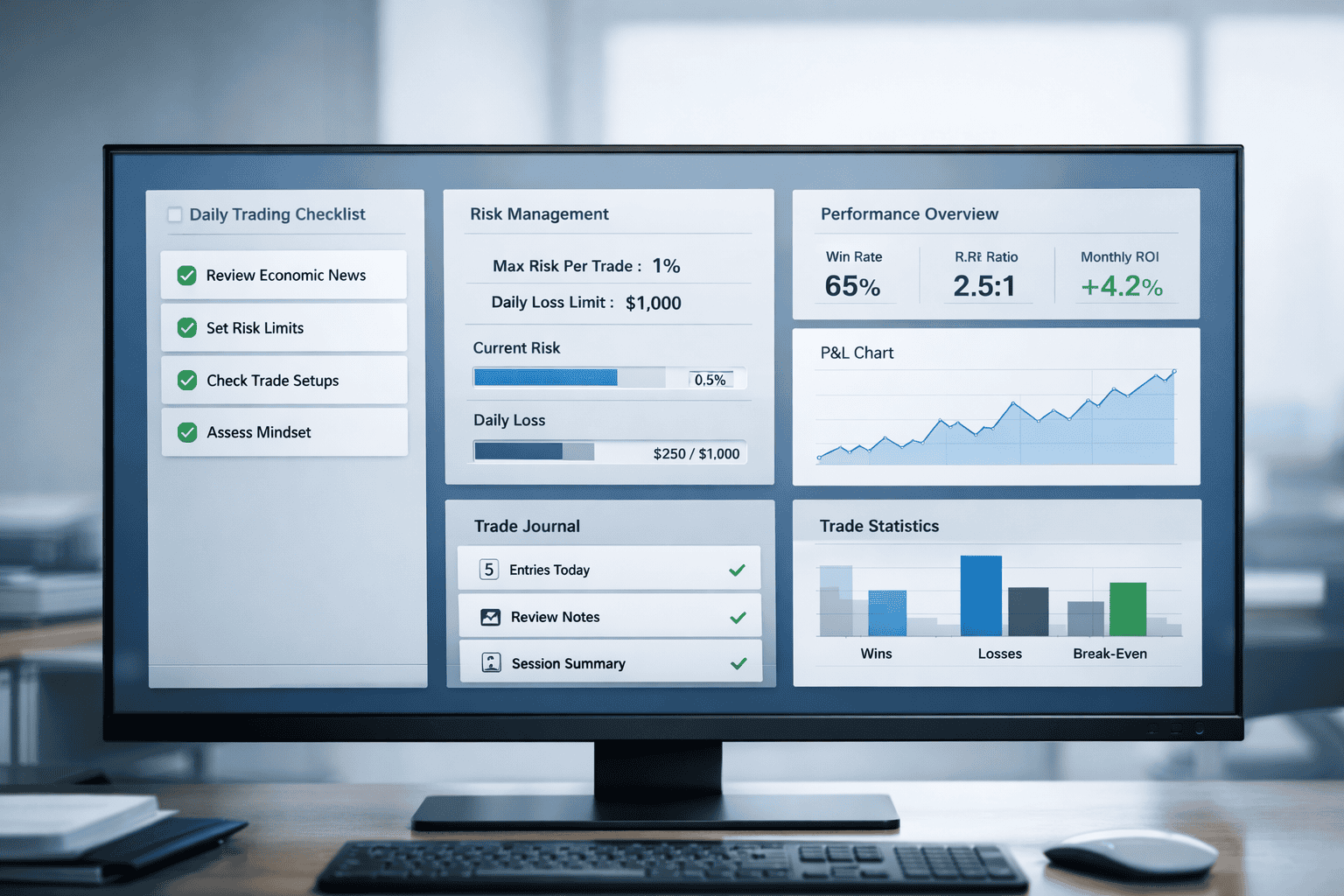
Routine discipline in trading is the ability to follow a structured daily trading process consistently – before, during, and after the session, regardless of market noise, emotions, or recent results.
Why Most Traders Never Become Consistent
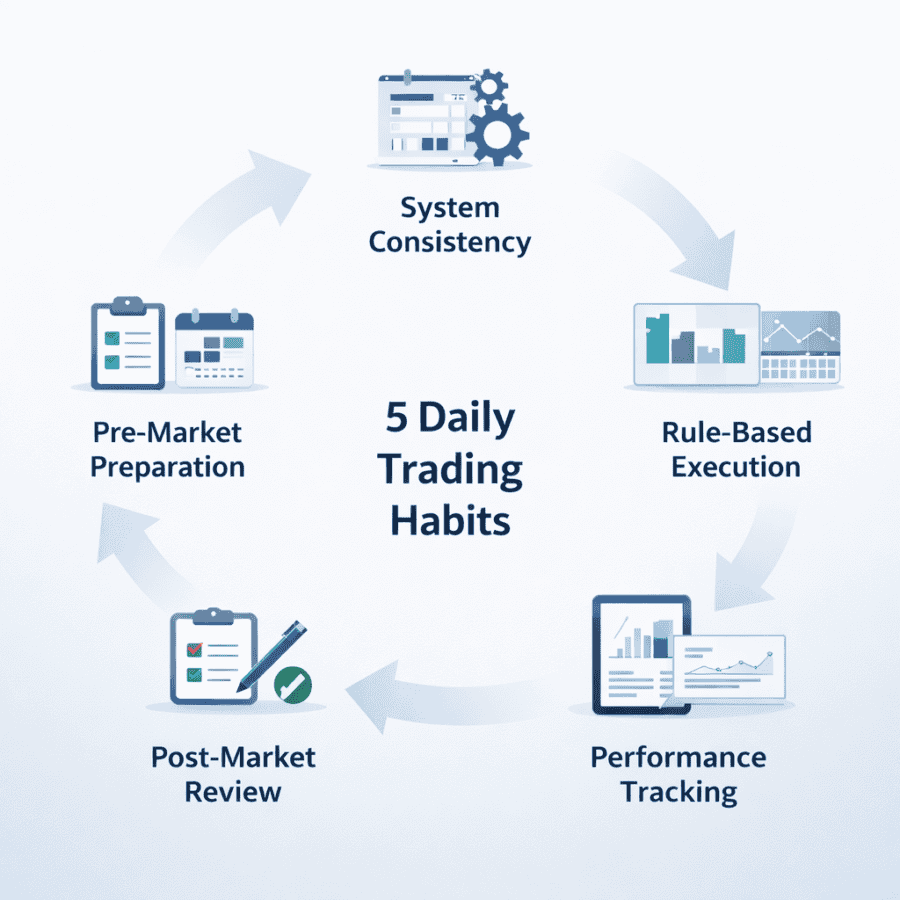
Routine discipline in trading is the real separator between novice traders and consistent performers. Most traders don’t lose because they lack intelligence, motivation, or access to information—they lose because their execution has no repeatable structure. In today’s markets, platforms are powerful and information is endless, yet consistency remains rare. The difference isn’t a secret strategy; it’s behavioural structure.
At Smart Online Trader, trading is treated like a performance-driven environment, where discipline, data, and repeatability determine long-term outcomes. This article breaks down five daily habits that build routine discipline and help transform inconsistent traders into structured, confident performers.
Key Takeaways
- Discipline isn’t a personality trait – it’s a repeatable system.
- A routine reduces impulsive decisions by adding structure before entry.
- Track behaviour metrics, not just profit, to build consistent execution.
- A daily review turns mistakes into learning data.
- Consistency improves fastest when you commit to one system and one environment.
Habit 1: Build a Non-Negotiable Pre-Market Routine
Consistent traders do not open charts casually. They begin every session with a structured pre-market routine.
A professional trading routine should include:
- Reviewing high-impact economic events
- Defining daily risk limits
- Identifying valid market conditions
- Confirming emotional readiness (state check)
This habit removes impulse decisions before they occur.
When traders skip preparation, emotions dominate execution. When preparation becomes routine, execution becomes more mechanical, because decisions are made before pressure shows up.
Smart Online Trader reinforces this habit through structured preparation frameworks inside the Performance Academy, where traders learn to operate within predefined rules rather than emotion.
Practical shortcut (2-minute pre-market check):
- What’s the market condition today (trend, range, high volatility)?
- What is my maximum risk for the day?
- What would make today a “no-trade” day?
Habit 2: Trade Rules, Not Opportunities
One of the most damaging habits novice traders develop is trading what they see instead of what they planned.
Consistent traders operate inside a rule-based environment:
- Trades are only taken when criteria are met
- Risk is predefined before execution
- Invalid conditions mean no trade
- If the setup isn’t present, the system does nothing
This approach mirrors professional systems: if conditions aren’t met, the system doesn’t execute.
According to Investopedia, having a clearly defined trading plan helps reduce emotional bias and improves consistency over time.
Rule-based trading transforms discipline from something traders “try” to something the process enforces.
Habit 3: Measure Behaviour, Not Just Profit
Profit is an outcome – not a process.
Consistent traders track performance metrics such as:
- Rule adherence percentage
- Risk-to-reward execution quality
- Maximum drawdown relative to plan
- Emotional discipline scores (a simple 1 to 5 rating works)
This data-first mindset mirrors how high-performing systems scale: decisions are driven by metrics, not feelings.
When traders focus only on profit, they chase outcomes. When they focus on behaviour, results often stabilise over time – because the inputs improve.
Simple behaviour scoreboard (start here):
- Did I take only A+ setups? (Yes/No)
- Did I respect risk limits? (Yes/No)
- Did I exit according to plan? (Yes/No)
- State score (1–5): How calm and deliberate was I?
Habit 4: End Every Day with a Structured Review
No professional system improves without feedback.
A structured post-market review should answer:
- Did I follow my rules today?
- Where did discipline slip?
- What emotions influenced decisions?
- What is the corrective action tomorrow?
This habit converts losses into learning data instead of emotional frustration.
Without review, mistakes repeat. With review, discipline compounds.
At Smart Online Trader, daily reviews are considered a core performance requirement, not an optional task.
Habit 5: Commit to One System, One Environment
Inconsistency thrives in chaos.
Consistent traders commit to:
- One trading model
- One risk framework
- One execution system
- One performance environment
System hopping resets discipline and delays mastery. Every time you switch tools, strategies, or rules, you reset the behaviour you’re trying to build.
Routine discipline is strongest when the environment supports the behaviour, because your process becomes familiar, measurable, and repeatable.
A useful rule: If you can’t explain your system in five bullet points, you don’t have a system yet -you have a collection of impulses.
Why Routine Discipline in Trading Beats Any Strategy
Strategies evolve. Markets change. Discipline scales.
Routine discipline creates:
- Predictable behaviour
- Reduced emotional exposure
- Capital-preservation habits
- Long-term sustainability
Professional traders focus less on “what works today” and more on what can be executed consistently.
Without routine discipline, even profitable strategies can collapse under emotional pressure – especially during drawdowns or high volatility.
FAQs
What is routine discipline in trading?
Routine discipline is the ability to follow a structured daily trading process consistently, regardless of market conditions or emotions.
How long does it take to build trading discipline?
Many traders begin noticing improvement within weeks when routines are applied daily and behaviour is measured consistently. The timeline varies by individual.
Is discipline more important than strategy?
In practice, yes. A simple strategy executed with discipline often outperforms a great strategy executed emotionally.
Can beginner traders apply these habits?
Absolutely. Beginners benefit the most by forming disciplined habits early, before bad patterns become permanent.
Does Smart Online Trader help enforce routine discipline?
Yes. Smart Online Trader provides structured education, performance frameworks, and accountability tools designed to support disciplined trading behaviour.
Final Takeaway
Consistency is not a talent. It’s a system.
Routine discipline in trading is built through daily habits, measured behaviour, and structured environments. When discipline becomes automatic, performance becomes more predictable.
Stop chasing better trades. Start building better routines.
Educational content only – not financial advice. Trading involves risk, and outcomes vary by individual behaviour, experience, and market conditions.
